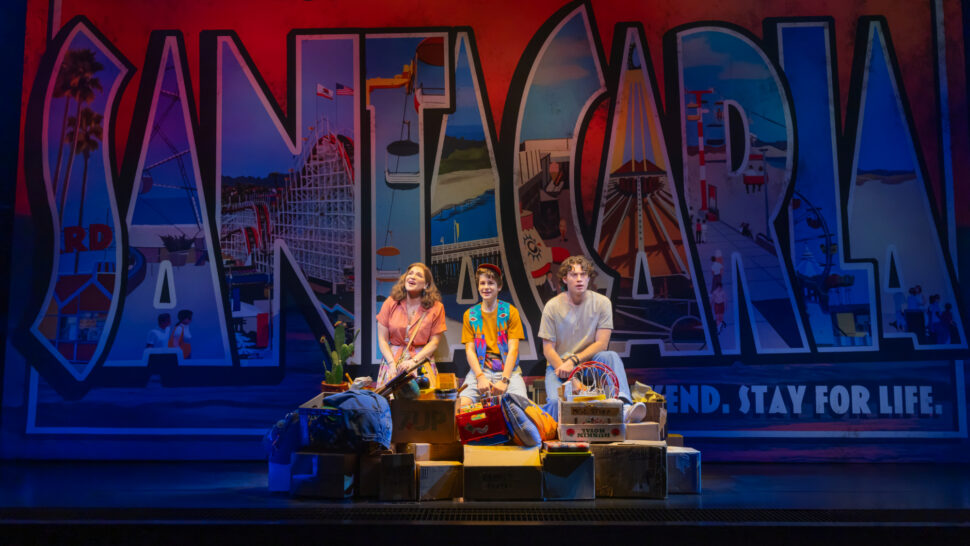
The neon-lit streets of Santa Carla return—not on VHS, but under the Broadway marquee. The Lost Boys, the 1987 cult vampire film known for its leather jackets, killer saxophone solos, and Corey-brooding galore, has been reborn as a splashy stage musical. But how does a nostalgic, irreverent horror-comedy about teenage bloodsuckers translate to live theater? Early reviews paint a vivid, if uneven, picture.
Critics have weighed in with a mix of nostalgic affection, theatrical admiration, and sharp skepticism. For fans of the original film, the adaptation carries the risk of sacrilege. For theater purists, it presents the challenge of turning a campy genre flick into a coherent, emotionally resonant musical. So, what do the critics actually think?
Let’s break down the critical reception, dissecting the consensus, the surprises, and the underlying tensions shaping how The Lost Boys on Broadway is being received.
The Good: Where the Musical Shines According to Critics
Many reviews highlight the production’s energy, design, and commitment to tone as standout strengths.
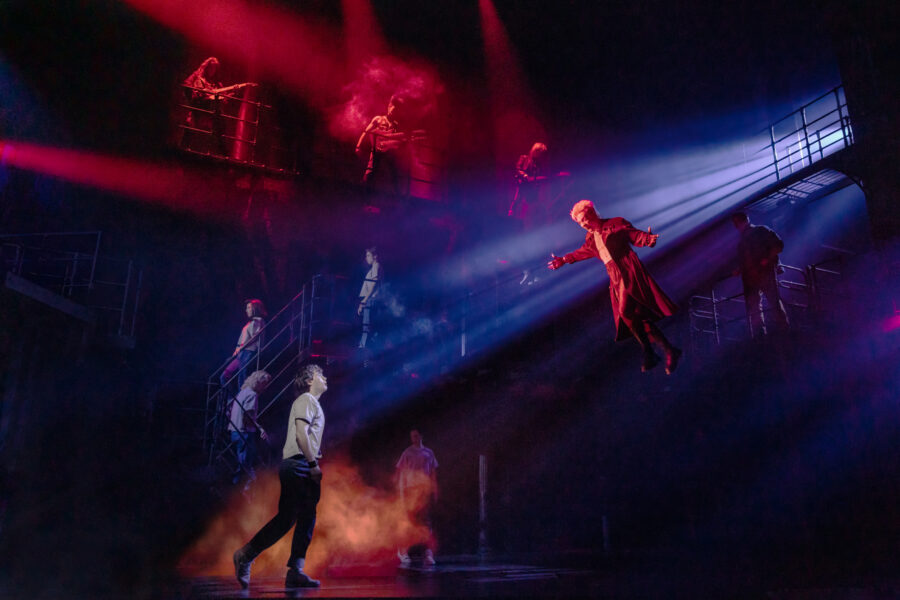
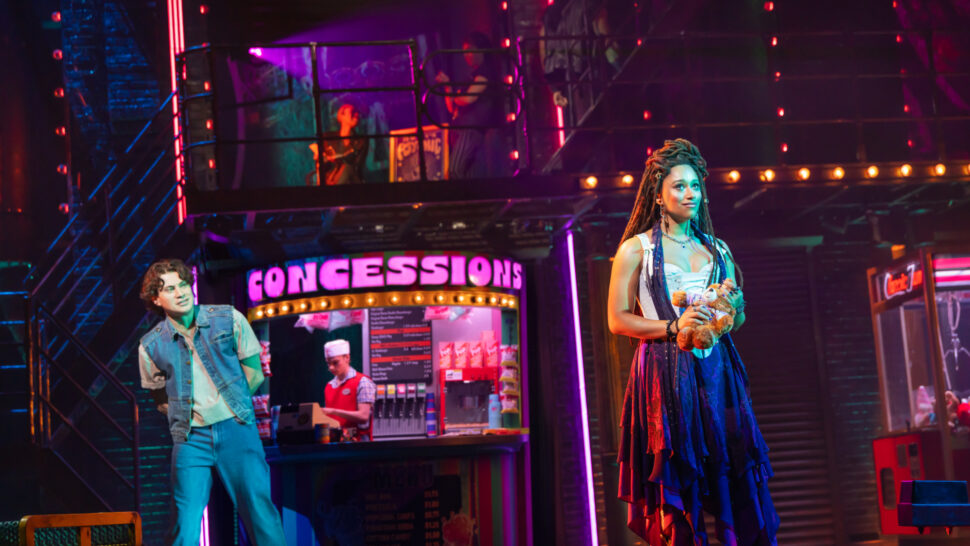
Aesthetic Fidelity and Visual Flair Critics consistently praise the show’s visual design. The New York Times called it “a neon-lit fever dream that nails the film’s 80s edge,” while Variety noted that “David’s leather duster floats across the stage like a dark omen, perfectly lit and choreographed.” The stagecraft—complete with fog machines, retro fashion, and a boardwalk carousel turned gothic altar—delivers the aesthetic nostalgia fans crave.
The score, composed by indie synth-pop duo Future Islands (in a surprising but inspired casting), earns acclaim for blending eerie electronica with 80s rock swagger. The reimagined version of Echo & the Bunnymen’s “The Killing Moon” during the vampire transformation scene is cited by The Hollywood Reporter as “a legitimate Broadway showstopper.”
Strong Performances Anchor the Madness Sam (played by rising star Julian Peña) receives near-universal praise for his comic timing and vocal range. Deadline describes him as “the nervous heart of the show,” balancing terror and humor in a way that elevates the material. Star Michael Emerson as Max, the corrupting deputy mayor-vampire, is called “sinisterly charismatic” by The Guardian, with a baritone that “oozes corruption and repressed desire.”
Even the Coreys—Cynthia Erivo as Dianne Hall and Josh O’Connor as Michael Emerson Jr.—are noted for injecting emotional depth into what could’ve been paper-thin roles.
The Bad: Plot Holes and Pacing Issues Stall Momentum
Despite its strengths, the show’s structural flaws are impossible for critics to ignore.
The Book Struggles to Balance Tone
While the film danced precariously between horror and comedy, the musical amplifies this tension to its detriment. The New Yorker critic Vinson Cunningham writes, “One moment we’re watching a child get bitten in the neck, the next we’re in a full-blown dance number about eternal youth. The tonal whiplash undermines the stakes.”
Several reviewers point out that the book—written by Schitt’s Creek co-creator Daniel Levy—tries too hard to be quirky and self-aware. Jokes about TikTok and modern parenting land with a thud, and attempts to “update” the narrative with Gen Z sensibilities often clash with the source material’s retro charm.
Pacing Dips in the Second Act The musical’s first act soars on momentum and spectacle, but critics agree that the second act drags. Time Out New York notes, “Once the vampires are revealed, the plot circles the same emotional beats until the finale feels inevitable rather than earned.” The absence of a strong central conflict after the midpoint leaves audiences disengaged, with some reviewers exiting at intermission.
Additionally, the love story between Michael and Star (played by breakout performer Lila Moreno) lacks chemistry and development. Vulture calls it “a romantic subplot on life support,” relying too heavily on ballads to compensate for shallow interaction.
The Ugly: Faithfulness vs. Innovation Sparks Debate
At the heart of the critical divide is a fundamental question: should a stage adaptation of a cult film stay faithful, or reinvent?
Die-Hard Fans Are Divided For purists, the changes are a betrayal. The elimination of the Frog brothers’ comic book store, the reduced role of Grandpa, and the reimagining of Edgar and Alan as gender-swapped twin DJs (played by drag performers Peppermint and D’Jacey) have sparked backlash online. Bloody Disgusting, while reviewing from a horror lens, states: “You can’t remove the Frogs and call it The Lost Boys. That’s like serving a burger without the patty.”
Yet, other critics—including The A.V. Club—praise these changes as “necessary modernization.” They argue that updating the characters allows for fresh commentary on family, identity, and outsider status—themes already present in the original.
Is It Theater or a Theme Park Ride? A recurring critique is that the show prioritizes spectacle over substance. American Theatre observes: “It often feels less like a musical and more like a haunted house attraction with singing.” The use of pyrotechnics, levitation, and a live bat (or animatronic, depending on the night) distracts from narrative cohesion.
Still, some critics welcome the excess. The Wrap calls it “a glorious, messy love letter to midnight movies,” suggesting that the show’s camp and chaos are features, not bugs.
Breaking Down the Score: Critical Consensus by Publication
To better understand the reception, here’s a snapshot of ratings and key takeaways from major outlets:
| Publication | Rating (Out of 10) | Key Takeaway |
|---|---|---|
| The New York Times | 6.5 | “Visually stunning, emotionally hollow.” |
| Variety | 7.0 | “Bold design choices elevate a flimsy book.” |
| The Hollywood Reporter | 8.0 | “The score alone is worth the ticket.” |
| The Guardian | 6.0 | “Too self-aware to scare, too camp to move.” |
| Deadline | 7.5 | “Peña and Emerson steal the show.” |
| Vulture | 5.0 | “A style-over-substance misfire.” |
| Time Out New York | 6.0 | “Great first act, collapses under its own weight.” |
The average score sits around 6.6, indicating a mildly positive but deeply divided reception.
Audience vs. Critic Response: Where the Split Lies
Interestingly, audience reactions on platforms like BroadwayWorld and Playbill Forums are significantly warmer. Patrons praise the “fun,” “energy,” and “nostalgia factor.” Many first-time theatergoers and younger fans unfamiliar with the film call it “an immersive experience.”
But critics remain unconvinced by emotional engagement. Where audiences see spectacle, reviewers see avoidance—of real stakes, real danger, real drama.
This split reflects a broader tension in modern musical theater: can a show succeed purely as entertainment, or must it also offer depth? The Lost Boys may be the test case.
Should You See It? A Critic-Informed Guide
Based on critical consensus, here’s how to decide:
- See it if: You’re a fan of the original film, enjoy theatrical spectacle, or want a fun, loud night out. The design and score alone make it a visual feast.
- Skip it if: You prioritize narrative coherence, character development, or emotional resonance. The second act may test your patience.
- Bring a friend if: You enjoy dissecting theater after the curtain falls. This is the kind of show that sparks post-show debates.
Final Verdict: A Flawed but Fascinating Adaptation
The Lost Boys on Broadway is not a masterpiece—but it’s not a trainwreck, either. It’s a bold, messy, neon-soaked experiment that captures the spirit of the original while stumbling over its own ambition.
Critics appreciate the audacity, the design, and the performances, but they can’t ignore the weak book and erratic pacing. It succeeds as sensory theater but falters as storytelling.
Yet, there’s something undeniably exciting about a musical that dares to bite. In a Broadway landscape often dominated by safe revivals and Disneyfied adaptations, The Lost Boys at least has fangs.
If you go in expecting perfection, you’ll be disappointed. But if you embrace the chaos, the camp, and the synth-heavy score, you might just fall under its spell.
FAQ
Did the original cast attend the premiere? No full reunion, but Kiefer Sutherland sent a humorous video message. Jami Gertz and the Coreys were not in attendance.
How long is the show? Approximately 2 hours and 20 minutes, including a 15-minute intermission.
Is it scary? Not in a traditional horror sense. It’s more stylized and theatrical—intense for young children but not terrifying.
Are the Frog brothers in it? Yes, but reimagined as DJs and social media influencers. Their comic book store is replaced with a vinyl pop-up shop.
Can I expect flying vampires and special effects? Yes—multiple flying sequences, fog, lighting illusions, and a dramatic blood-red fountain in Act II.
Is the saxophone solo from the movie included? Yes, and it’s expanded into a full musical number titled “Sax in the Moonlight,” performed by a shadowy street performer.
Is there a cast recording available? A digital album was released the week after opening night, featuring all major songs and score highlights.
FAQ
What should you look for in Critics Review The Lost Boys on Broadway: What’s the Verdict?? Focus on relevance, practical value, and how well the solution matches real user intent.
Is Critics Review The Lost Boys on Broadway: What’s the Verdict? suitable for beginners? That depends on the workflow, but a clear step-by-step approach usually makes it easier to start.
How do you compare options around Critics Review The Lost Boys on Broadway: What’s the Verdict?? Compare features, trust signals, limitations, pricing, and ease of implementation.
What mistakes should you avoid? Avoid generic choices, weak validation, and decisions based only on marketing claims.
What is the next best step? Shortlist the most relevant options, validate them quickly, and refine from real-world results.