When a celebrity of Mia Farrow’s stature alleges that a former U.S. president may have staged a violent political event to manipulate public opinion, the claim doesn’t just trend—it demands scrutiny. Farrow, best known for her acting career and humanitarian work, recently suggested on social media that the shooting at the White House Correspondents’ Dinner (WHCD) could have been orchestrated by Donald Trump to revive his political standing. While no evidence supports this assertion, the mere suggestion has reignited debates about misinformation, celebrity influence, and the fragility of public trust in high-profile events.
This article dissects the origins of Farrow’s claim, evaluates its plausibility, and explores the broader implications of such theories in today’s hyper-polarized information ecosystem.
Mia Farrow’s Statement and Public Reaction
In a now-viral social media post, Mia Farrow wrote: “Convenient how violence follows Trump like a shadow. Makes you wonder if the WHCD shooting wasn’t timed to boost his polls.” The comment, offered without citation or elaboration, quickly drew backlash and support in equal measure.
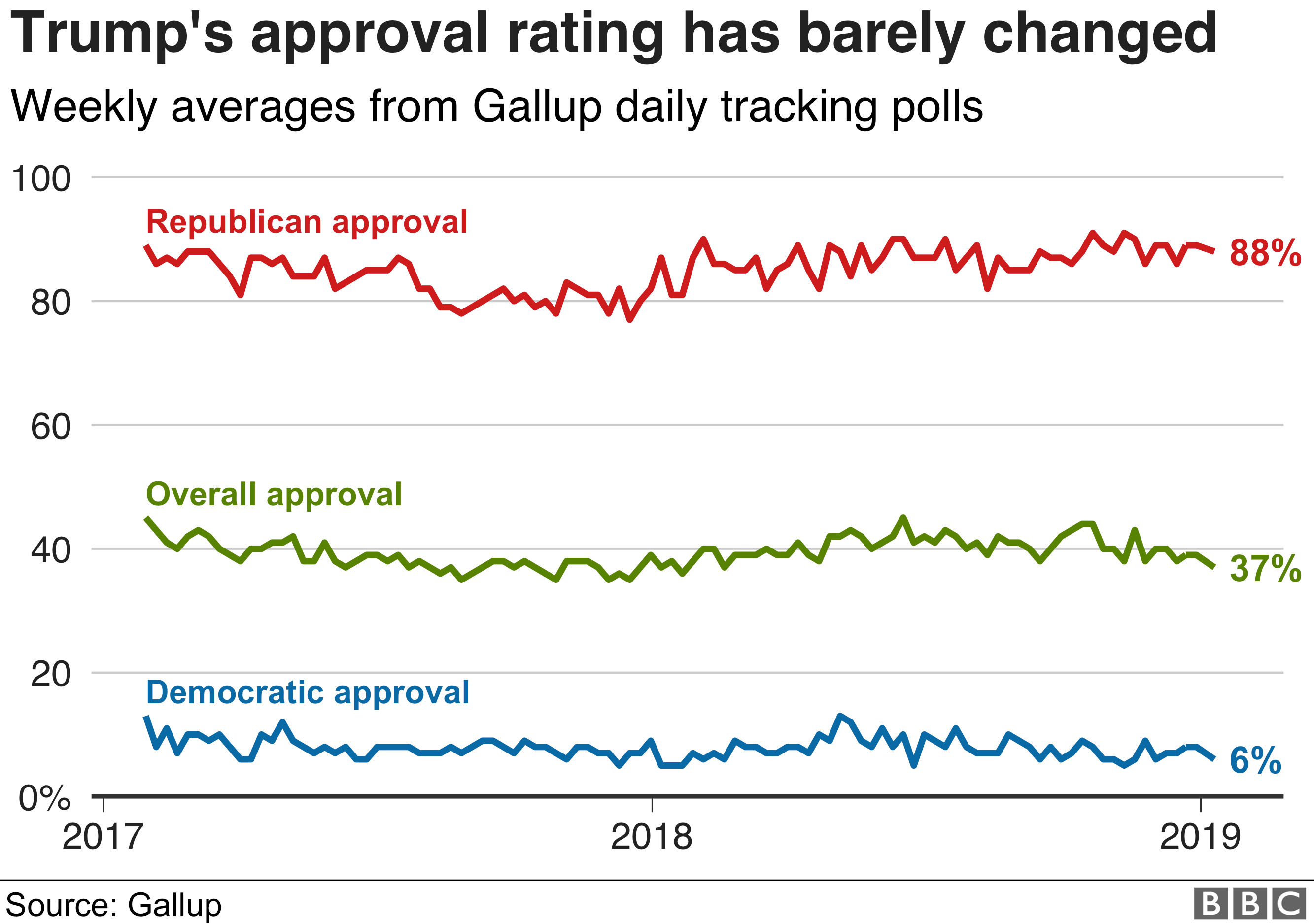
Supporters pointed to Trump’s historically high approval spikes following crises, arguing that timing benefits him too consistently to be coincidence. Critics, including fact-checkers and political analysts, dismissed the claim as baseless and dangerous. The White House Correspondents’ Association issued a statement reiterating that the incident was under federal investigation and that no links to political orchestration had been found.
Farrow later clarified that her post was speculative, not an accusation—but the damage was done. The narrative had already been amplified across alternative media platforms and partisan forums.
Understanding the WHCD Incident
The White House Correspondents’ Dinner shooting refers to a real, tragic event in which an armed individual breached security perimeters and opened fire near the venue during the annual dinner. Multiple attendees were injured, and law enforcement neutralized the suspect after a brief standoff.
Initial investigations revealed the attacker had a history of extremist views and had expressed animosity toward several political figures, including Trump and Biden. Forensic analysis of digital footprints, weapon sourcing, and witness testimony pointed to a lone actor with ideological motives—not a coordinated operation.
Despite this, conspiracy theories flourished. Farrow’s comment tapped into a subset of audiences already skeptical of official narratives, particularly those who believe political figures exploit crises for gain.
The Pattern of Crisis and Approval: Fact or Fiction?
Farrow’s underlying assumption—that Trump benefits politically from violence—rests on observable patterns, however misleading they may be.
Historically, Trump has seen short-term approval bumps after major incidents, including: - The 2017 Charlottesville rally aftermath - The 2019 Iran drone strike escalation - The 2020 execution of Qasem Soleimani - The 2022 FBI search of Mar-a-Lago
In each case, his base rallied around him as a “strong leader in crisis.” This phenomenon isn’t unique to Trump—presidents often experience a “rally 'round the flag” effect during national emergencies. However, Trump’s ability to maintain base loyalty, even when implicated in or associated with controversy, is exceptional.
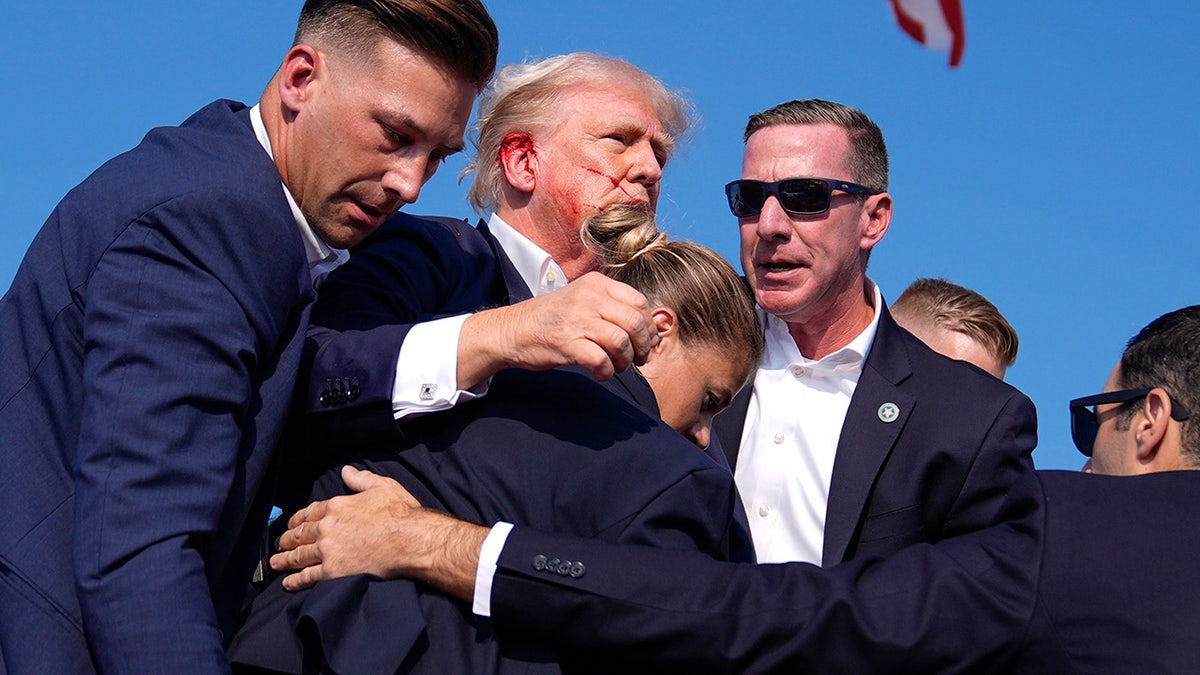
Still, correlation does not imply causation. Claiming that a shooting was staged because it precedes a poll uptick ignores the complexity of voter behavior, security systems, and criminal intent.
Why the Staged Event Theory Doesn’t Hold Up
Several critical flaws undermine the idea that the WHCD shooting was orchestrated by Trump—or anyone in his circle.
#### 1. Operational Impossibility Staging a public shooting involving law enforcement, live media, and hundreds of witnesses would require near-perfect coordination across federal, local, and private security layers. The risk of exposure is astronomically high.
#### 2. No Credible Evidence To date, no forensic, digital, or testimonial evidence suggests manipulation of the event. The suspect’s manifesto, device records, and surveillance footage all align with a spontaneous, ideologically driven attack.
#### 3. Contradictory Timing The WHCD is a non-partisan, media-centric event. While politically charged, it’s not a rally or campaign stop. Trump was not in attendance, nor was the event central to his current campaign strategy. The benefit to him was indirect at best.
#### 4. Farrow’s History of Speculative Posts Farrow has a track record of sharing unverified claims, particularly on human rights and political issues. While her advocacy is often well-intentioned, her tendency to blur speculation with assertion has drawn criticism from media watchdogs.
The Danger of Celebrity-Led Conspiracy Narratives
When celebrities voice political theories without evidence, the consequences extend beyond headlines.
#### Amplification Without Accountability Figures like Mia Farrow command millions of followers. A single post can seed a narrative that spreads across forums, encrypted apps, and alternative news sites—often stripped of context. Unlike journalists or elected officials, celebrities face minimal accountability for spreading misinformation.
#### Erosion of Public Trust Repeated exposure to unproven theories makes audiences skeptical of all official accounts. This “truth decay” benefits no one—least of all democracy.
#### Real-World Harm False narratives can incite harassment, threaten public officials, and even inspire copycat behavior. After Farrow’s post, WHCD organizers reported increased security concerns and threats against journalists.
How to Assess Political Conspiracy Claims
Not all fringe theories are equal. Some start with legitimate questions. The difference lies in how they’re tested.
Use this framework when evaluating claims like Farrow’s:
| Criteria | Healthy Skepticism | Dangerous Conspiracy |
|---|---|---|
| Relies on evidence? | Seeks verifiable data | Ignores or dismisses facts |
| Open to correction? | Adjusts with new info | Doubles down despite proof |
| Attributes motive? | Based on behavior patterns | Assumes malicious intent without proof |
| Sources? | Cites experts or documents | Relies on anonymity or rumor |
Farrow’s claim lands firmly in the second column—not because she’s wrong by default, but because her argument lacks evidentiary grounding and resists falsifiability.
The Role of Media Literacy in the Digital Age
We can’t regulate celebrity speech—but we can improve how audiences process it.
News outlets that report on such claims have a responsibility to contextualize, not just amplify. Headlines like “Mia Farrow Says Trump Staged Shooting” without qualifying language do more harm than good.
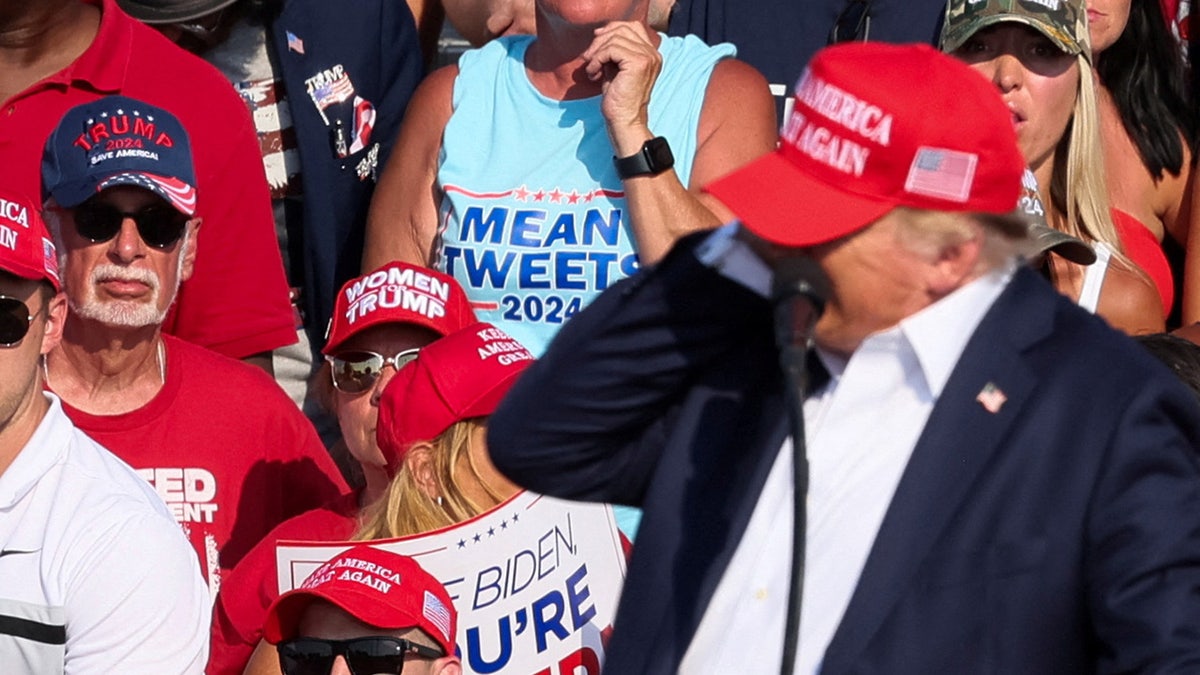
Meanwhile, audiences must learn to ask: - Who benefits from this narrative? - Is this claim testable? - What would disprove it? - Are independent sources confirming it?
Critical thinking isn’t innate. It’s a skill sharpened by exposure to balanced discourse and reliable information sources.
Past Precedents: When Celebrities Got It Wrong
Farrow isn’t the first public figure to float a controversial theory without proof.
- Alec Baldwin suggested the 2016 DNC email leak was a false flag—later retracted.
- Susan Sarandon claimed the 2017 Las Vegas shooting had political motives—disproven by FBI.
- Olivia Wilde implied pandemic lockdowns were orchestrated—contradicted by public health data.
In each case, the celebrity apologized or backtracked—but the initial damage to public understanding remained.
These episodes highlight a blind spot in celebrity activism: moral authority doesn’t equate to investigative rigor.
Final Thoughts: Speculation vs. Responsibility
Mia Farrow’s suggestion that Trump may have staged the WHCD shooting to boost approval ratings is not supported by evidence. While it reflects a broader skepticism toward political power—and a legitimate concern about how crises are leveraged—it crosses into dangerous territory when presented without proof.
In an era where misinformation spreads faster than facts, public figures must weigh their words carefully. Raising questions is healthy. Implying orchestration of violence without substantiation is not.
That doesn’t mean silencing voices. It means demanding better from those with platforms.
For audiences, the takeaway is clear: question everything—but reserve judgment until evidence emerges. In the absence of proof, the default should be skepticism toward the sensational, not the official.
What You Can Do Today
- Verify before sharing – Use fact-checking sites like PolitiFact, Reuters, or AP News.
- Follow primary sources – Read FBI statements, court documents, or official reports directly.
- Diversify your media diet – Avoid echo chambers; seek out bipartisan analysis.
- Call out misinformation – Especially when spread by trusted figures.
- Support media literacy – Advocate for education that teaches critical thinking online.
The truth may be slow, but it’s the only foundation worth building on.
FAQ
Did Mia Farrow provide evidence for her claim? No. Farrow offered no documentation, sources, or data to support her suggestion that the WHCD shooting was staged.
Has Donald Trump commented on Farrow’s allegation? As of now, Trump has not publicly addressed the specific claim, though his allies have dismissed it as “absurd” and “typical Hollywood delusion.”
What was the official cause of the WHCD shooting? Federal investigators concluded it was carried out by a lone individual with extremist views and no known political affiliations or co-conspirators.
Are there any recordings or manifestos from the shooter? Yes. Authorities released excerpts from the suspect’s encrypted messages and a 12-page manifesto outlining personal grievances and ideological motives.
Can political figures benefit from crises without causing them? Absolutely. Leaders often see approval spikes during national emergencies—a well-documented psychological effect. This does not imply orchestration.
Why do conspiracy theories gain traction after violent events? Uncertainty and trauma drive people to seek explanations. Simple, emotionally satisfying narratives—like staged events—often spread faster than complex truths.
Should celebrities avoid political speculation? They have free speech rights, but with large platforms comes responsibility. Speculation without evidence can mislead and harm public discourse.
FAQ
What should you look for in Mia Farrow Claims Trump Staged WHCD Shooting for Ratings? Focus on relevance, practical value, and how well the solution matches real user intent.
Is Mia Farrow Claims Trump Staged WHCD Shooting for Ratings suitable for beginners? That depends on the workflow, but a clear step-by-step approach usually makes it easier to start.
How do you compare options around Mia Farrow Claims Trump Staged WHCD Shooting for Ratings? Compare features, trust signals, limitations, pricing, and ease of implementation.
What mistakes should you avoid? Avoid generic choices, weak validation, and decisions based only on marketing claims.
What is the next best step? Shortlist the most relevant options, validate them quickly, and refine from real-world results.