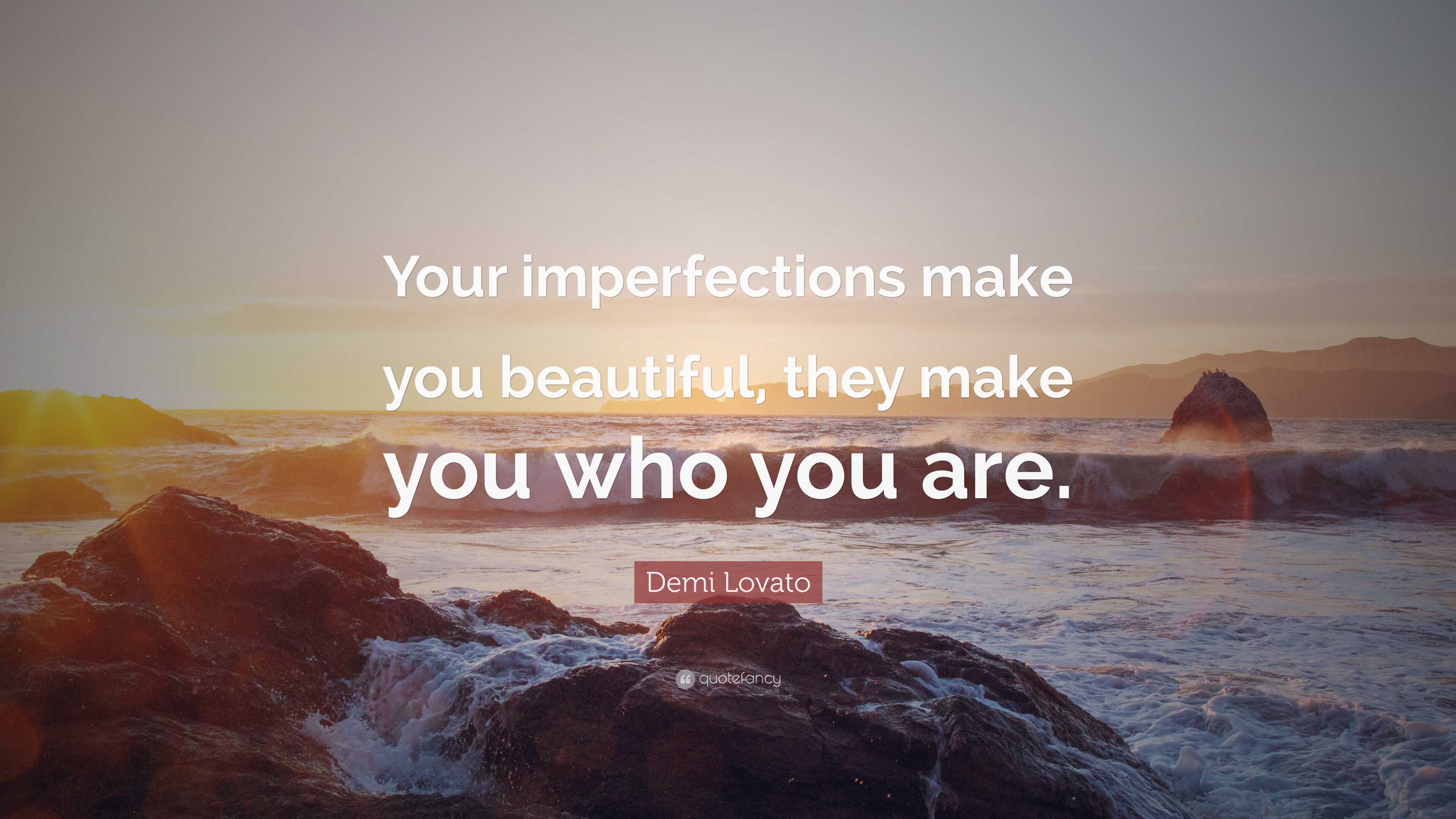
We scroll past curated feeds of flawless skin, perfect bodies, and seemingly effortless success—only to feel more inadequate. That gap between what we see and how we feel is where Demi Lovato’s quote cuts through the noise: “Your imperfections make you beautiful. They make you who you are. So just be yourself. Love yourself for who you are.” It’s not just a feel-good line—it’s a quiet revolution against perfectionism, a call to reclaim authenticity in a world obsessed with image.
This isn’t just another celebrity quote of the day. It’s a distillation of a lifelong struggle, a hard-earned truth from someone who’s faced eating disorders, addiction, identity crises, and public breakdowns—all under the glare of fame. The weight behind these words comes from lived experience, not a script. And that’s why it resonates across ages, cultures, and personal battles.
Let’s unpack why this message matters—and how to actually live it.
The Myth of Perfection and Why It Fails Us
Perfection is a lie sold to us through filters, highlight reels, and unspoken social codes. We’re taught that success means flawlessness: the right body, the right job, the right relationships. But this standard is not only unattainable—it’s dehumanizing.
Demi Lovato’s rise in the Disney machine placed her in that very trap: young, polished, palatable. But beneath the surface, she was fighting bulimia, self-harm, and emotional turmoil. Her quote isn’t born from theory. It’s born from surviving the cost of pretending.
Common mistake: Many people interpret “be yourself” as a simple mindset shift. But it’s not just about confidence—it’s about dismantling years of conditioning that equate worth with appearance, productivity, or approval.
Real-life example: A 28-year-old graphic designer shares how she deleted Instagram for three months after realizing every post made her compare her body, her work, and her life to others. “Demi’s quote was the first thing I read when I came back online. It wasn’t about going viral—it was permission to be messy, to be healing.”
Perfectionism doesn’t lead to happiness. It leads to burnout, anxiety, and emotional detachment. The path to real connection—with others and ourselves—starts with dropping the act.
Why Imperfections Define Identity More Than Achievements
We celebrate milestones: promotions, marriages, awards. But who we are isn’t defined by trophies—it’s shaped by scars, quirks, vulnerabilities, and the things we’ve survived.
Demi Lovato’s voice cracks with rawness. Her lyrics don’t shy from pain. Her public breakdown in 2018 wasn’t hidden—it became part of her story. And that’s the power of her message: your flaws aren’t flaws—they’re fingerprints. Unique. Unrepeatable.
Consider this:
- The scar on your knee from a childhood fall? A reminder of risk and resilience.
- The anxiety that flares before public speaking? A sign of caring deeply.
- The failed relationship that left you raw? A lesson in boundaries and self-worth.
These aren’t flaws to fix. They’re the texture of a real life.
Workflow tip: Try a weekly “imperfection journal.” Not a gratitude journal—this one focuses on moments you felt “less than,” and what they taught you. One entry might read: “I canceled plans because I was overwhelmed. Instead of guilt, I recognized: my limits are real. Honoring them is strength.”
This is how self-love moves from abstract concept to daily practice.
Self-Acceptance as an Act of Rebellion
In a culture that profits from insecurity—diet pills, skin creams, cosmetic surgeries—loving yourself as you are is radical. Demi Lovato’s declaration isn’t passive. It’s an act of resistance.
Think about the industries built on making you feel “not enough.” They depend on silence. On shame. On the belief that you need fixing.
But when you say, “I am enough as I am,” you disrupt that economy.
Practical example: After coming out as non-binary and embracing their identity, Demi began using they/them pronouns. Their music shifted—less pop, more honesty. “I was doing everything I could to fit into a mold that wasn’t me,” they said in a 2021 interview. “Now I’m not trying to be perfect. I’m trying to be real.”
That shift didn’t alienate fans—it deepened loyalty. Because people don’t connect with perfection. They connect with truth.
Limitation to acknowledge: Self-acceptance isn’t a one-time victory. It’s daily. Some days you’ll feel strong. Others, you’ll look in the mirror and hate what you see. That’s normal. The goal isn’t constant confidence—it’s returning, again and again, to compassion.
Struggle as the Seed of Strength
Demi Lovato’s quote doesn’t ignore pain. It embraces it as part of the human experience. And that’s where its depth lies: it doesn’t promise happiness will come from fixing yourself. It says happiness begins with accepting yourself—even in the broken places.
Her struggles with bipolar disorder, substance abuse, and recovery are well-documented. But she’s never framed them as weaknesses. Instead, they’re sources of empathy, artistry, and advocacy.
Realistic use case: A college student recovering from an eating disorder uses Demi’s music as grounding. “When I hear ‘Skyscraper,’ it’s not just a song. It’s proof that someone else climbed out of the dark. And if they did, maybe I can too.”
Success isn’t the absence of struggle. It’s the courage to keep going through it.
Checklist: Signs You’re Growing Through, Not Just Going Through - You speak kindly to yourself after a setback - You set boundaries without guilt - You share your story to help others - You feel pride in survival, not just achievement - You prioritize healing over hustle
These are the quiet victories that shape a meaningful life.
Happiness Isn’t a Destination—It’s a Practice
We chase happiness like it’s a finish line: once I lose weight, once I get the job, once I find love. But Demi’s message suggests a different truth: happiness starts with presence. With self-love now, not later.
Happiness isn’t found in becoming someone else. It’s found in becoming more fully yourself.
That means: - Laughing at your awkwardness instead of hiding it - Owning your emotions instead of numbing them - Choosing rest over performance - Letting people see your process, not just your progress
Workflow insight: Replace “What do I need to fix?” with “What do I need to honor?” This small shift changes everything. Instead of attacking your flaws, you begin to understand them. The overthinking? It’s sensitivity. The procrastination? It might be resistance to values misalignment.
Happiness flourishes when we stop fighting ourselves.
Success Redefined: From Fame to Authenticity
Demi Lovato has platinum records, award nominations, and millions of followers. By conventional standards, they’re wildly successful. But their most powerful work isn’t on stage—it’s in their vulnerability.
Their documentary Demi Lovato: Dancing with the Devil didn’t glamorize fame. It exposed its cost. And in doing so, it redefined what success means: not applause, but alignment.
Key distinction: - External success = awards, likes, income - Internal success = peace, self-trust, authenticity
One can exist without the other. True fulfillment comes when they align.
Example: A social media influencer with 500K followers enters therapy after a panic attack. She realizes she’s been performing for years. Inspired by Demi, she posts a raw video: “I don’t have it all together. I’m in recovery. This is me now.” Engagement drops—but the comments shift. Now, people say: “Thank you for being real.”
That’s the kind of success that lasts.
How to Live
This Quote Every Day
Knowing a quote is one thing. Living it is another.
Here’s how to turn Demi Lovato’s words into daily action:
- Start with language. Catch yourself when you say, “I’m such a mess.” Replace it with, “I’m a work in progress—and that’s okay.”
- Share your story selectively. You don’t need to go viral. But telling one trusted friend your truth builds connection.
- Consume media mindfully. Unfollow accounts that make you feel small. Follow voices like Demi’s that champion realness.
- Celebrate effort, not just outcome. Did you try? Did you show up? That’s winning.
- Use art as release. Write, sing, draw—don’t worry about skill. Let it be imperfect. Let it be yours.
These aren’t grand gestures. They’re tiny rebellions against perfection. And over time, they rebuild self-worth from the ground up.
Demi Lovato’s quote of the day isn’t just inspiration. It’s an invitation: to drop the mask, to embrace your story, and to recognize that your so-called flaws are the very things that make you unforgettable. In a world that demands conformity, being yourself is the bravest thing you can do.
Start today. Not when you’re thinner, smarter, or richer. Now.
Frequently Asked Questions
What is Demi Lovato’s most famous quote about self-love? One of their most impactful quotes is: “Your imperfections make you beautiful. They make you who you are. So just be yourself. Love yourself for who you are.”
Has Demi Lovato spoken about mental health struggles? Yes, openly. They’ve discussed bipolar disorder, addiction, eating disorders, and recovery in interviews, music, and their documentary Dancing with the Devil.
How can I practice self-acceptance daily? Start with self-compassionate language, journal about your emotions, set boundaries, and limit exposure to toxic comparisons.
Why is vulnerability important for mental wellness? Vulnerability builds connection, reduces shame, and fosters authenticity—key components of long-term emotional health.
Does Demi Lovato identify as non-binary? Yes, in 2021, Demi came out as non-binary and uses they/them pronouns.
How does embracing imperfection lead to success? It fosters resilience, creativity, and authenticity—qualities that lead to sustainable success, not just fleeting achievement.
Can self-love coexist with self-improvement? Absolutely. True growth comes from self-love, not self-loathing. You improve not because you’re broken, but because you care about yourself.
FAQ
What should you look for in Demi Lovato’s Quote of the Day: Embrace Imperfection, Find Strength? Focus on relevance, practical value, and how well the solution matches real user intent.
Is Demi Lovato’s Quote of the Day: Embrace Imperfection, Find Strength suitable for beginners? That depends on the workflow, but a clear step-by-step approach usually makes it easier to start.
How do you compare options around Demi Lovato’s Quote of the Day: Embrace Imperfection, Find Strength? Compare features, trust signals, limitations, pricing, and ease of implementation.
What mistakes should you avoid? Avoid generic choices, weak validation, and decisions based only on marketing claims.
What is the next best step? Shortlist the most relevant options, validate them quickly, and refine from real-world results.